The Tragedy of “Rahaf and Riyaf”.. Court Confirms “Intentional Killing and Torture with Chains” in a Case that Shook Yemenis

The Tragedy of “Rahaf and Riyaf”.. Court Confirms “Intentional Killing and Torture with Chains” in a Case that Shook Yemenis
Reports Exclusive – Yemen Children Platform – Mohammed Jamal Al-Tayyari
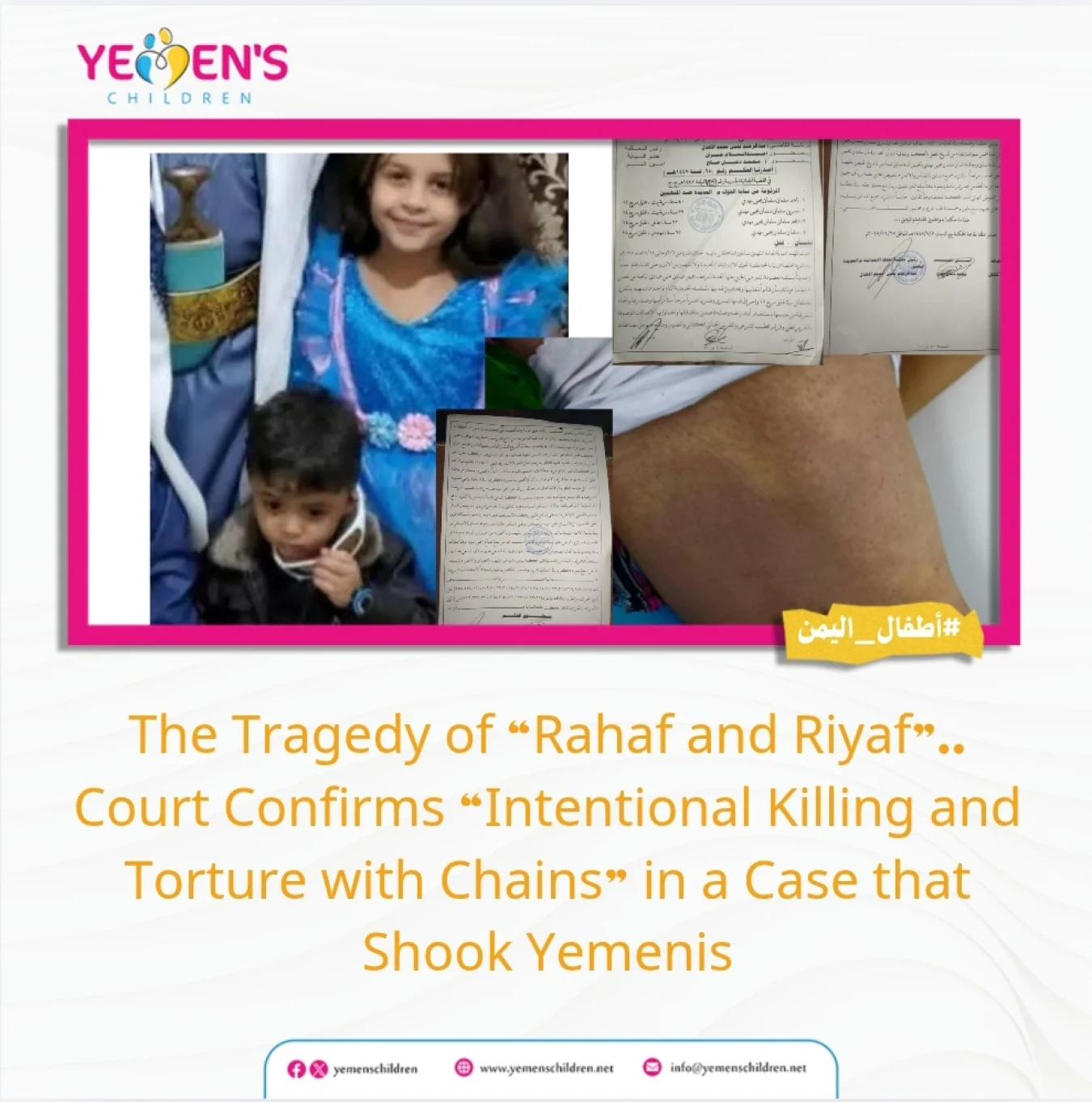
In a humanitarian tragedy stripped of all meaning of mercy, and before a judiciary striving to address wounds heavy with blood and tears, the Al-Hawk Primary Court in Al-Hodeidah Governorate issued its ruling last December in the case of the child Rahaf Jameel Abadi and her brother Riyaf, who were subjected to a systematic campaign of abuse inside a home that had turned into a detention site for the most brutal forms of physical and psychological torment against children who had not yet reached adolescence.
40 Days of Hell
The events of this shocking crime date back to the period from June 6 to July 14, 2025, in a house located in the “Ghalil” area of Al-Hodeidah. There, 12-year-old Rahaf was not living a normal life; instead, she was subjected to brutal acts of torture carried out by the convicted individuals (Nahed, Nesreen, and Amjad Salman).
Investigation records and forensic reports confirmed that Rahaf was restrained with iron chains by her feet to prevent movement or escape. She was severely beaten with blunt and solid objects targeting her head, chest, and all parts of her body. The abuse did not stop there; the perpetrators went as far as burning her left foot, causing severe injuries and serious complications that ultimately led to her death. The court classified these acts as “intentional killing and aggression.”
The Survivor “Riyaf”: Psychological Wounds Under Scrutiny
The child Riyaf was not spared from this brutality. He was also subjected to torture and physical abuse, leaving deep psychological scars. The court ruling confirmed that Riyaf’s mental condition has not yet stabilized and that he remains in urgent need of intensive medical follow-up and financial support for treatment to overcome the severe physical and emotional harm he endured after witnessing and experiencing such terror at the hands of the convicted individuals.
Court Verdict: Formal Conviction and Discretionary Sentences
After a thorough review of evidence, criminal reports, and documented materials, the court found (Nahed, Nesreen, and Amjad Salman) guilty of the intentional killing of Rahaf and the assault on her brother Riyaf. It also convicted (Salman Yahya Mahdi) of assisting the perpetrators during the commission of the crime.
Despite the gravity of the crime, the death penalty (retribution) was waived due to a pardon granted by the victims’ mother, converting the punishment to a public right and blood money (diya). Accordingly, the court sentenced Nahed and Nesreen to five years in prison, and Amjad and Salman to two years each, while obligating them jointly to pay the blood money to Rahaf’s father.
On the civil side, the court ordered the convicted individuals to pay two million Yemeni riyals as temporary compensation to Riyaf to cover treatment expenses, granting his father the right to claim further compensation later. They were also required to pay one and a half million riyals in litigation costs.
A Stain That Time Cannot Erase
Rahaf and Riyaf’s father, Jameel Abadi, expressed the bitterness of this legal journey, stating that the ruling represents an official documented acknowledgment of the “intentional killing and torture” his children suffered. In a statement addressed to the public via Facebook, he noted that the legal battle is still at its initial stage and ongoing, stressing that “God’s right is not nullified by pardon,” and that Rahaf’s blood will remain a lasting stain of shame upon the perpetrators until they stand before their Creator on a Day when neither wealth nor children will avail.
This case, followed closely by the Yemen Children Platform, stands as a cry against domestic violence and underscores the urgent need for stricter laws to protect children and ensure that abusers do not escape punishment proportionate to the severity of their crimes—so that the tragedy of Rahaf and Riyaf is not repeated in any other Yemeni home.