
Children Between Real Play and the Phone: A Childhood Turning Toward the Screen

Report by journalist Al-Anoud Naji for the Yemen's Children Platform
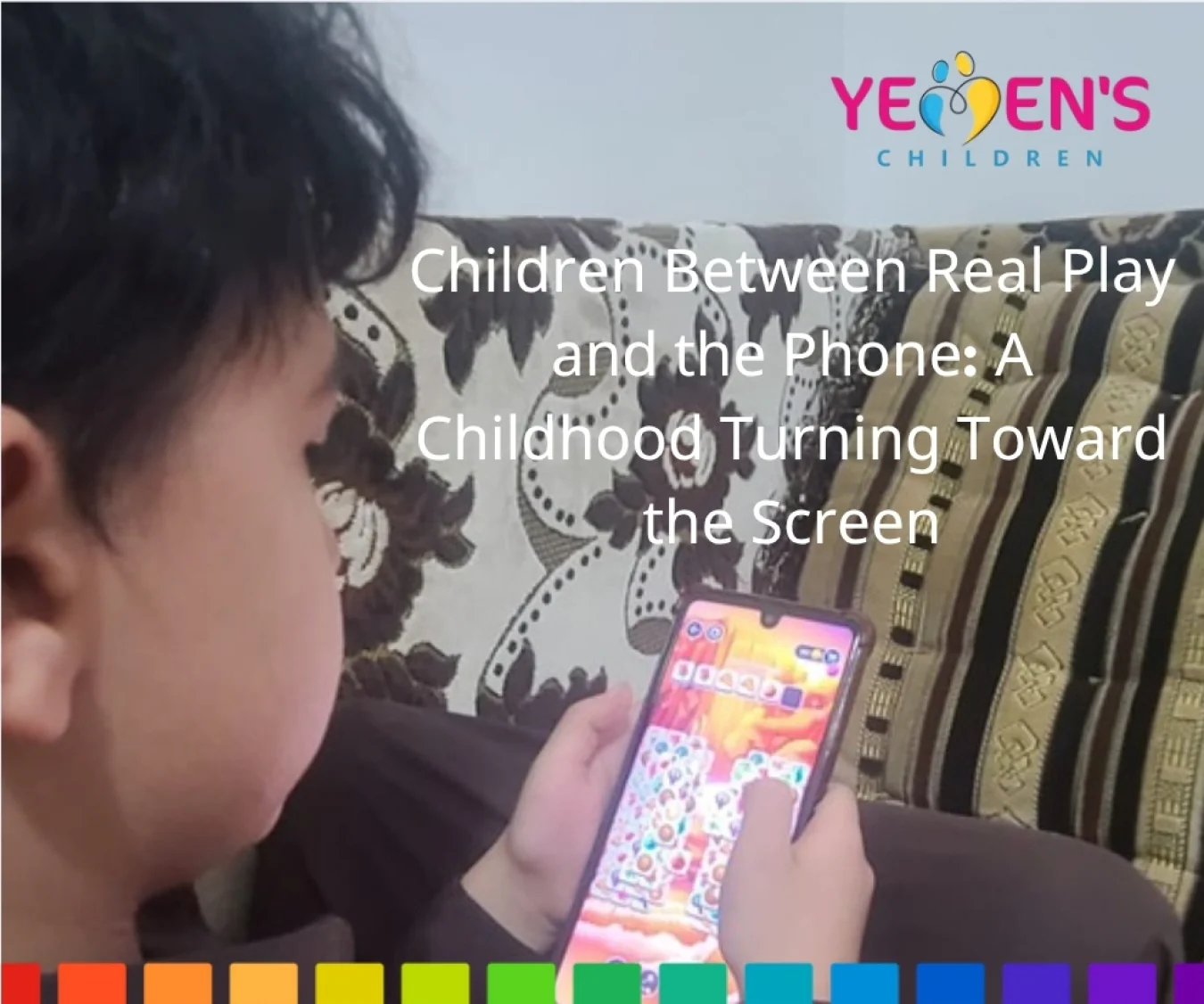
Streets have grown quieter. Children sit absorbed in their phone screens while the ball rolls away in the wind. This scene has become a familiar sight that we increasingly observe in our daily lives.
When Lamar, a six-year-old girl, was asked how much time she spends on the phone, she replied, “A lot,” explaining that she mostly uses it to watch videos. When asked why she does not play with her friends or siblings, she answered: “I don’t want to play… I want the phone.”
Another child, Rahaf, said she also prefers the phone, noting that her friends are not always around and that she does not enjoy playing with her sisters. As a result, she spends her time watching clips on the phone or television.
Meanwhile, Ahmed, a four-year-old child, said he mainly uses the phone to watch children’s videos because he enjoys watching them.
The Phone as a Tool to Calm Children
Amani, a mother, says her children spend most of the day on the phone. She noted that they sometimes leave it for a short period—no more than about fifteen minutes—to play or go outside, before returning to it again.
Explaining why she gives them the phone, she said: “It keeps them busy for a while so we can get some work done.”
The mother admits that the phone has indeed overshadowed real-life play, stressing that she does not believe giving children their own phones is a positive thing.
She added that taking the phone away from a child is not easy. When asked whether the child reacts negatively if the phone is withheld, she replied: “Yes, she cries a lot and behaves in annoying ways.”
Rahab, another mother, also pointed out that her children spend most of their time on the phone. She explained that this is sometimes due to the children’s high energy and noise, which pushes her to give them the phone to calm them down.
She also confirmed that playing on the phone has, to some extent, begun to dominate over real play, noting that preventing children from using the phone can sometimes trigger angry reactions.
Psychological and Behavioral Effects
Psychologist Najla Al-Azzazi warns that prolonged phone use may leave negative effects on children. She explained that excessive use of electronic devices can increase anxiety, stress, and irritability, and weaken a child’s ability to regulate emotions.
She added that sleep disturbances are also among the most prominent effects due to constant exposure to screens, in addition to feelings of loneliness and social isolation among some children.
She noted that there are signs indicating a child’s psychological dependence on the phone, including intense distress when it is taken away, constantly thinking about it, and neglecting schoolwork or other activities.
Excessive use may also affect a child’s social communication skills, as opportunities for direct interaction with others decrease, weakening their understanding of body language and facial expressions.
Real Play vs. the Digital World
The psychologist emphasized that children who engage in group play develop cooperation and communication skills, learn problem-solving, and build empathy toward others.
In contrast, children who spend most of their time in front of screens may suffer from weaker social skills and tend toward isolation.
She also noted that frequent exposure to fast-paced digital games may lead to distraction and poor concentration, which could negatively affect academic performance.
When Does It Become Concerning?
According to the psychologist, mild frustration when a phone is taken away is a natural reaction. However, the situation becomes concerning when severe tantrums, persistent crying, or aggressive behavior appear, or when a child loses interest in activities they previously enjoyed.
She also recommends regulating screen use according to age. Screens should ideally be avoided for children under two years old, while children aged 6 to 12 can use phones for one to two hours per day under parental supervision.
The Role of the Family
The psychologist stresses that families play a key role in reducing excessive phone use by setting limits for screen time, encouraging outdoor play and family activities, and ensuring that parents themselves serve as role models in balanced technology use.
She concluded by saying that excessive phone use may lead to what is known as digital addiction among children, which requires cooperation between families and schools to raise awareness about healthy technology use.