Cabinet Approves National Child Protection Plan for 2026–2029

Cabinet Approves National Child Protection Plan for 2026–2029
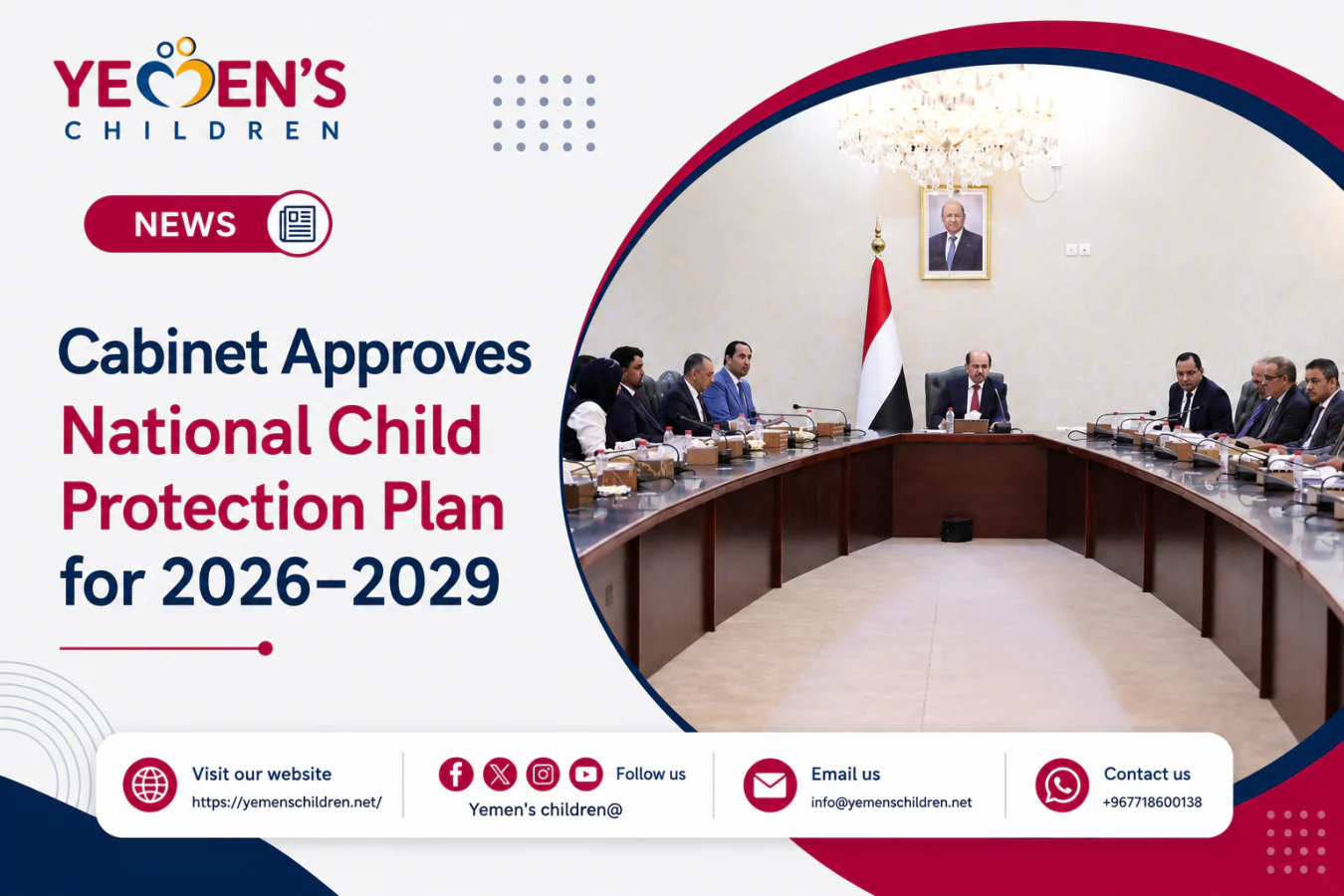
The Cabinet, during its meeting held on Thursday in the interim capital, Aden, chaired by Prime Minister Dr. Shaye Mohsen Al-Zindani, approved the National Child Protection Plan for 2026–2029, submitted by Minister of Social Affairs and Labor Mokhtar Al-Yafai, as a national framework for organizing and advancing child protection efforts.
The plan aims to develop an integrated national child protection system and strengthen the capacity of government institutions and relevant stakeholders in prevention, response, case management, and the provision of care and referral services. It seeks to contribute to creating a safer and more supportive environment for children and improving access to protection services for the most vulnerable groups.
The plan includes several strategic objectives, including establishing a modern national information infrastructure and disaggregated databases on children, linking them to a case management system and an electronic service mapping platform. It also aims to build the capacities of national personnel working in child protection and develop alternative care arrangements for children who have lost parental care or are at risk of separation from their families.
Other objectives include mobilizing national, regional, and international resources to finance child protection programs; updating and harmonizing legal frameworks, national guidelines, referral mechanisms, coordination, monitoring, and accountability systems; expanding and improving child protection services; strengthening cross-sectoral integration; and enhancing the institutional capacities of the Ministry of Social Affairs and Labor at both the central and governorate levels.
The Cabinet emphasized the importance of adopting the plan as a reference framework for relevant government entities when designing and implementing child protection programs and interventions. The Ministry of Social Affairs and Labor was tasked with leading and coordinating its implementation in cooperation with ministries, government agencies, local authorities, international partners, and civil society organizations.
The Cabinet also directed the adoption of a national mechanism for coordination, monitoring, and accountability regarding the implementation of the plan, including the submission of periodic reports on progress. Relevant entities were instructed to define their responsibilities and implementation contributions in accordance with the plan and its annexes, incorporate financial requirements into annual plans and budgets, and mobilize the necessary domestic and international resources for implementation.
The plan targets 11 governorates and is expected to provide protection services to approximately 504,000 children, while also building the capacities of around 27,000 national personnel across relevant sectors. The total estimated cost of implementing the plan during the 2026–2029 period is approximately US$351.4 million.