Minister of Health Launches National Strategy for Community-Based Primary Health Care 2026–2029

Minister of Health Launches National Strategy for Community-Based Primary Health Care 2026–2029
Minister of Public Health and Population Dr. Qasim Buhaibeh today launched, in the interim capital Aden, the National Strategy for Community-Based Primary Health Care for 2026–2029.
The strategy aims to establish a unified, equitable, and sustainable national system for community-based primary health care; improve access to essential health services for families and communities, particularly in remote areas and among the most vulnerable groups; improve maternal, newborn, and child health; strengthen nutrition and reproductive health services; and connect communities with different levels of the health system.
In a speech delivered during the launch ceremony, attended by Minister of Education Dr. Adel Al-Majid and Minister of Social Affairs and Labor Mokhtar Al-Yafai, along with undersecretaries and senior officials from the Ministry of Health, representatives of international and local organizations, and health-sector partners, Dr. Buhaibeh said the strategy represents a transition toward a more organized and integrated national approach to community health care. The approach places communities at the heart of the health system and brings essential services closer to families while making them more equitable and sustainable.
He noted that years of crises, displacement, and difficulties in accessing health facilities have demonstrated the critical importance of community health workers as the first link between families and the health system and as one of the key elements enabling the health sector to reach villages, remote areas, and the most vulnerable populations.
The Minister explained that the strategy seeks to move from fragmented community-based initiatives and structures toward a unified and integrated national network linked to primary health care facilities and operating according to clearly defined roles and responsibilities, with effective systems for supervision, monitoring, and accountability.
He highlighted that the strategy focuses on providing an integrated package of services covering reproductive health; maternal, newborn, child, and adolescent health; nutrition; and strengthened referral systems. It also includes training and qualifying community health workers, providing them with the necessary supervision, guidance, and supplies, and adopting clear standards for measuring performance and outcomes.
Dr. Buhaibeh stressed the need to recognize community health workers as part of the national health workforce and to gradually move from short-term project-based models toward a more stable and sustainable national model, with unified standards for selection, training, supervision, and performance evaluation.
He emphasized the importance of coordinating the efforts of the Ministry of Health, health offices, health facilities, local communities, and development partners within the framework of the strategy. This, he said, would help reduce fragmented and duplicated interventions, improve the efficiency of resource utilization, and direct resources toward priority areas and the populations most in need.
The Minister said:
> “The next phase requires investment in building and sustaining the health system, rather than focusing solely on financing activities. This includes investing in community health workers, supervision, information systems, supply chains, referrals, and quality, while strengthening the capacity of national and local institutions to manage the community health care network.”
He stressed that the true measure of the strategy’s success would not be the number of meetings or training sessions held, but the tangible improvements it brings to people’s lives by ensuring that mothers and newborns receive timely care, protecting children from preventable diseases, and effectively connecting villages and remote areas to the health system.
For his part, Akil Ir, UNICEF Representative to Yemen, said the launch of the strategy represents an important step toward strengthening community-based health care and placing the needs of families and children at the center of health planning and implementation.
He praised the Ministry of Health’s efforts in developing the strategy and affirmed UNICEF’s readiness to continue supporting national efforts to strengthen maternal and child health, nutrition, and primary health care services, as well as to develop the capacities of community health workers, contributing to translating the strategy into tangible results at the family and community levels.
He called for stronger coordination among different sectors and partners and for resources to be efficiently directed toward national priorities and the areas and groups most in need, thereby strengthening the sustainability of community health services and ensuring equitable access to them.
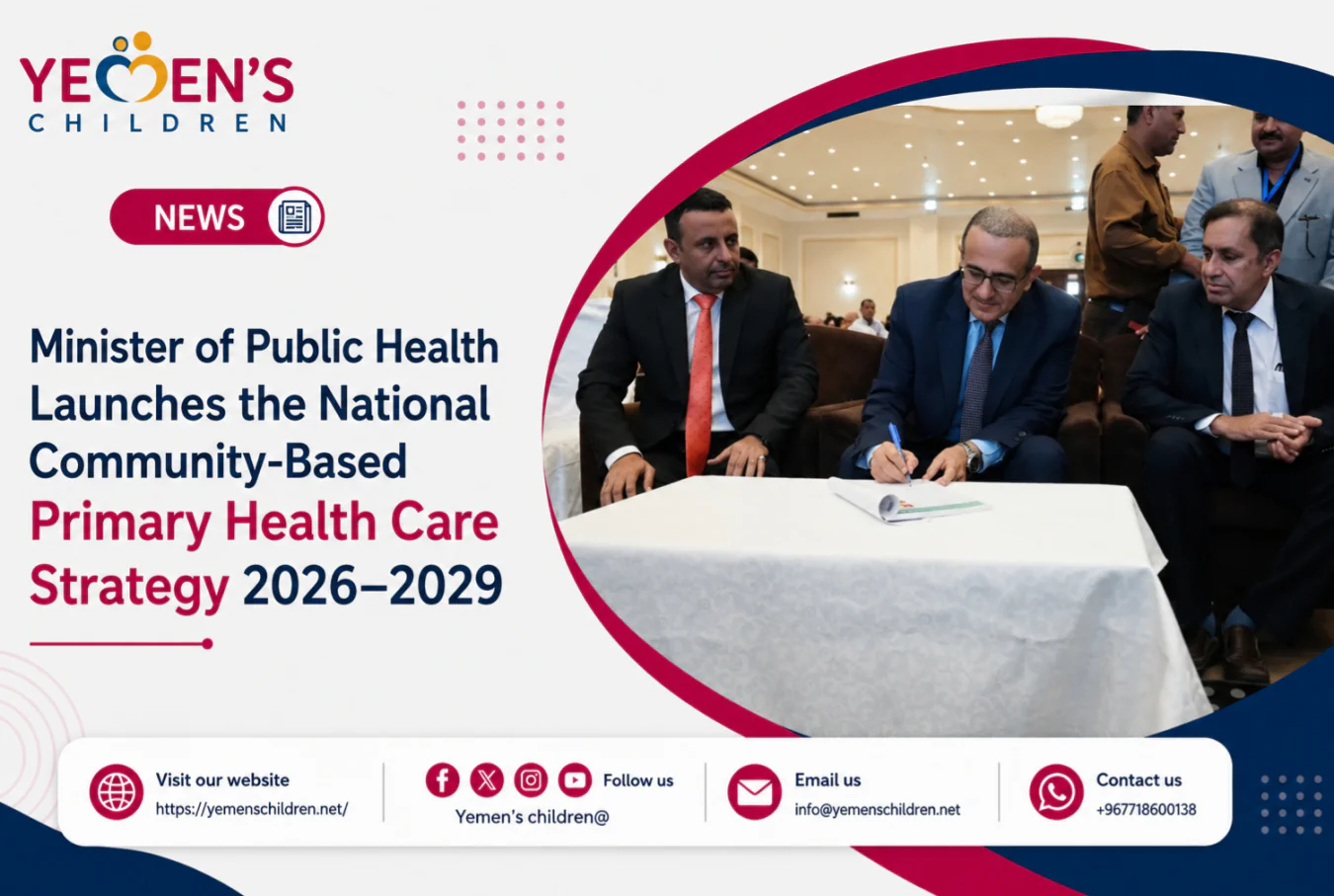
The event included the official signing of the strategy document by the Minister of Health, as well as presentations on the stages of its development, its key foundations and implementation pathways, and the technical efforts and contributions that helped finalize it.
At the conclusion of the event, government entities, institutions, partners, and personnel who contributed to the development of the National Strategy for Community-Based Primary Health Care 2026–2029 were honored in recognition of their efforts and contributions to strengthening the community health care system.